

When additional space is required, one of the first decisions organisations may need to make is whether to buy or hire a modular building.
Both options can provide high-quality, purpose-designed accommodation, but the right approach will depend on how the building will be used, how long it is required, and the organisation's wider plans for the site.
For a long-term requirement where the building will form a permanent part of an estate, purchasing may make more sense. However, where additional space is required for a defined period, future requirements are uncertain, or an organisation does not want to commit to purchasing a building outright, modular building hire can provide a more flexible alternative.
Understanding the differences can help organisations choose an approach that reflects both their immediate requirements and longer-term plans.

Is It Better To Buy Or Hire A Modular Building?
There is no single answer that applies to every project.
Hiring a modular building may be more suitable when space is required temporarily, future capacity requirements could change, accommodation is needed during refurbishment, or an organisation does not want to make the upfront investment associated with purchasing a building.
Purchasing may be more appropriate where there is an established long-term requirement and the building is intended to remain in use as part of an organisation's estate.
Modular Building Hire Vs Purchase At A Glance
The decision will ultimately depend on the organisation, site, and project requirements. Four of the main factors to consider are:
- Project duration – how long will the additional space be required?
- Budget – is purchasing the building outright appropriate for the available budget?
- Flexibility – could capacity or operational requirements change?
- Long-term plans – is the building temporary accommodation or part of a permanent estates strategy?
Considering these factors at the beginning of a project can make it easier to determine which route is most appropriate.

When Does Hiring A Modular Building Make More Sense?
Organisations may choose to hire a modular building for many different reasons. The requirement does not necessarily have to be short term; in some cases, buildings can remain on hire for an extended period where this better suits the organisation's plans.
Hiring may be particularly appropriate when:
- Additional space is required for a defined period
- Temporary accommodation is needed during refurbishment or redevelopment
- Future capacity requirements are uncertain
- An organisation wants greater flexibility over its accommodation
- Additional space is needed without committing to purchasing a building outright
This can make hire particularly useful for organisations whose estates or operational requirements are likely to change.
For more information about the types of accommodation available, explore our modular building hire options.
Temporary Space During Refurbishment Or Redevelopment
Refurbishment and redevelopment projects can create an immediate requirement for replacement accommodation.
A school may need temporary classrooms while an existing teaching block is refurbished. A healthcare organisation may need clinical or support accommodation while existing facilities are upgraded. Commercial organisations may require temporary offices, welfare facilities, or operational space while work takes place elsewhere on the site.
In these situations, purchasing an additional building may not make sense if the requirement only exists for the duration of the project.
Hiring can provide accommodation for the required period before the building is removed once the permanent facilities are available again.
Where a modular building is being introduced onto an operational site, factors including access, utilities, site constraints, and planning should also be considered. Our blog on planning requirements for modular buildings on existing sites explores these considerations in more detail.
Responding To Changing Space Requirements
Not every organisation knows exactly how much space it will require several years from now.
Changes in pupil numbers, patient demand, staffing levels, contracts, services, or business growth can all affect accommodation requirements.
Hiring can provide organisations with additional space while those longer-term requirements become clearer, rather than requiring an immediate commitment to purchasing a building.
For commercial organisations in particular, this may provide a way of responding to growth, new contracts, or changing regional requirements. Our article on how modular buildings support rapid business expansion without disrupting operations looks at this in more detail.
The same principle can apply within education. Where pupil numbers, curriculum requirements, or wider estates plans are changing, temporary accommodation can provide additional capacity while longer-term plans are developed.
Hire Doesn't Have To Mean Lower-Quality Accommodation
The word "temporary" can sometimes suggest basic or short-lived accommodation, but the length of time a building is required does not necessarily determine its quality.
A hired modular building can still provide a comfortable, functional environment designed around the people who will use it.
Depending on the project, buildings can incorporate suitable heating, lighting, ventilation, accessible facilities, internal finishes, and layouts appropriate to their intended use.
This is particularly important where buildings will be occupied every day as classrooms, offices, healthcare facilities, or other working environments.
Our blog on what makes a high-quality modular building explains some of the factors organisations should consider when assessing the quality of modular accommodation.
Modular Building Hire In Practice
Real projects can help demonstrate where hiring a modular building may be appropriate.
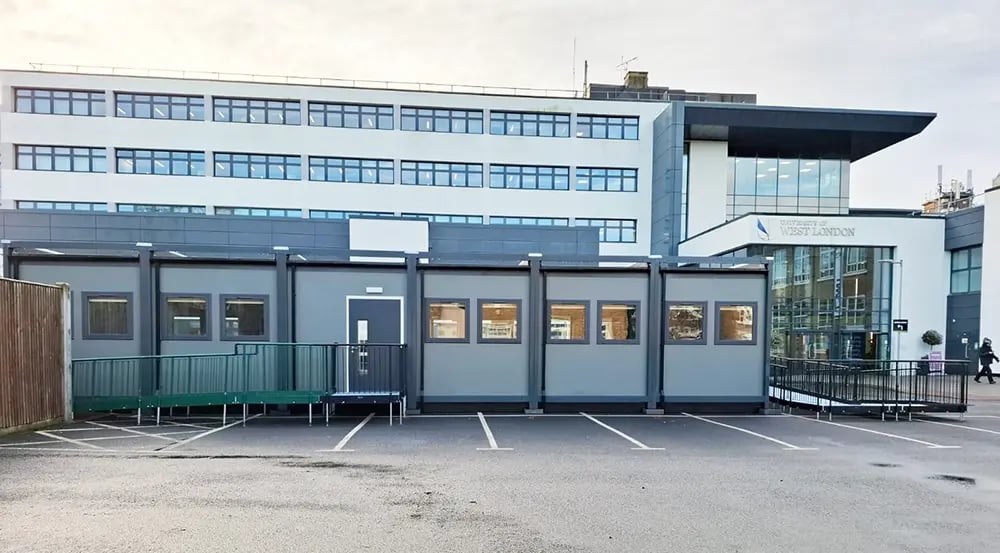
University of West London – Temporary Lecture Theatre
The University of West London required additional teaching accommodation and used a modular building to provide a temporary lecture theatre.
The building was supplied on a 39-week hire period, providing the university with the additional capacity it required for a defined period without the need to purchase permanent accommodation.
This is a good example of how modular hire can support universities, colleges, and other education providers where additional teaching space is required to meet a temporary or changing need.
Heckmondwike Grammar School – Additional Teaching Space
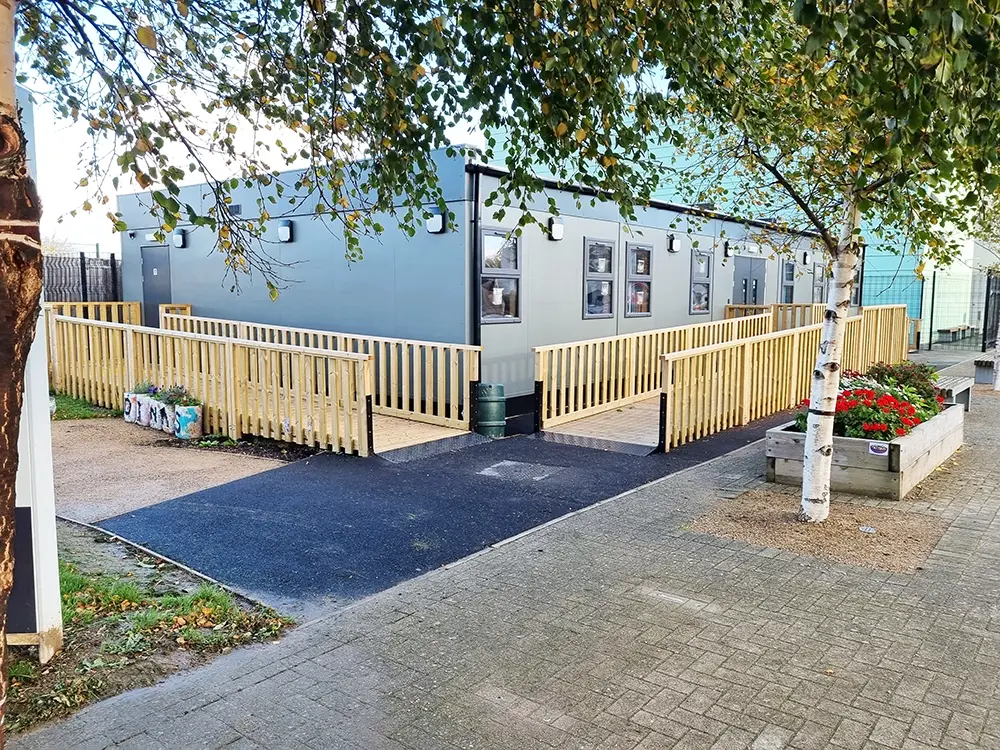
Modular hire has also been used to provide additional accommodation at Heckmondwike Grammar School, demonstrating how schools can increase teaching capacity without necessarily committing to a permanent building from the outset.
This type of approach can be useful where schools need to respond to changing pupil numbers, refurbishment programmes, or short- to medium-term estates requirements.

St Richard's Hospital – Temporary Mortuary Facility
Healthcare estates can also face temporary accommodation requirements during wider refurbishment and redevelopment programmes.
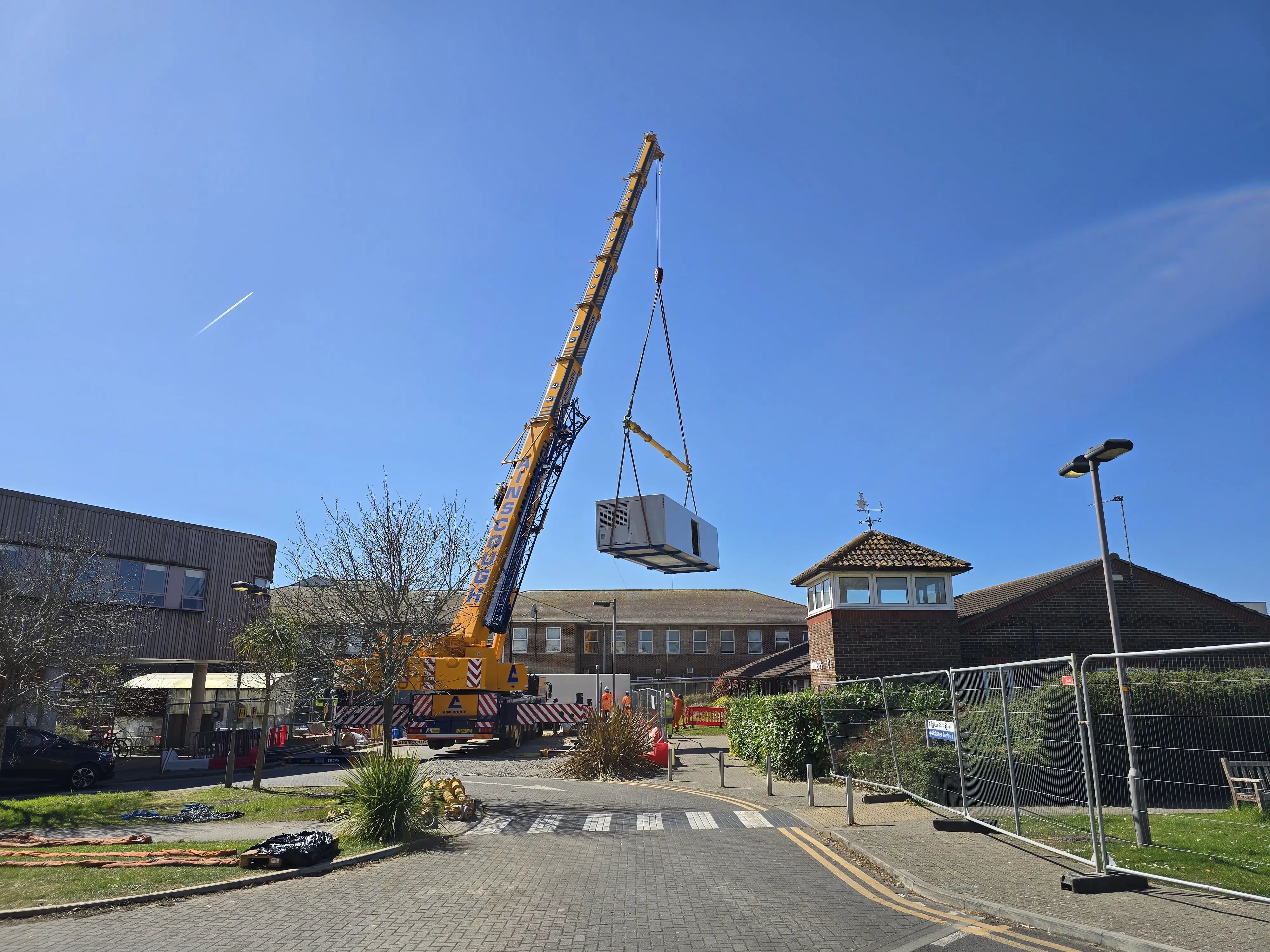
At St Richard's Hospital in Chichester, a modular mortuary facility was initially provided on hire to support the hospital's operational requirements.
The building was subsequently purchased, demonstrating another potential advantage of modular hire: where circumstances and requirements change, there may be the opportunity to retain the building on a longer-term basis rather than removing it at the end of the original hire period.
When Might Buying A Modular Building Be More Appropriate?
Hiring isn't necessarily the right option for every project.
Where there is a clear, established requirement for a building that will remain in use for many years, purchasing may provide a more appropriate long-term solution.
For example, an organisation may decide to buy a modular building when:
- The additional capacity is expected to be required permanently
- The building forms part of a long-term estates strategy
- There is available capital budget for the project
- The organisation wants long-term ownership of the asset
- There is little expectation that the accommodation requirement will change
Modern modular buildings can be designed for long-term use and specified around the operational, architectural, and performance requirements of the project.
The decision should therefore be based on the intended use of the building rather than an assumption that hire is always temporary and purchase is always permanent.
Can You Hire A Modular Building And Buy It Later?
In some circumstances, yes.
An organisation may initially choose to hire because its future requirements are uncertain or because purchasing is not appropriate at that particular stage.
If the building later becomes a longer-term requirement, there may be an opportunity to purchase it rather than ending the hire arrangement.
This can provide useful flexibility where organisations know they require additional space now but are not yet ready to make a permanent decision.
The availability and terms of any future purchase option should be discussed at the beginning of the project, as arrangements will vary depending on the building and hire agreement.
How Do You Decide Whether To Hire Or Buy?
The decision should begin with the intended use of the building rather than simply comparing the initial costs of hire and purchase.
Consider how long the building is likely to be required, whether that timeframe is certain, how future capacity may change, and whether ownership of the building is important to the organisation.
Where there is a clear permanent requirement, buying may be the logical route. Where the requirement is temporary, evolving, or uncertain, hiring can provide greater flexibility.
It is also worth considering the wider project requirements, including site preparation, planning, utilities, access, installation, and what will happen to the building once it is no longer required.
Considering Whether To Hire Or Buy A Modular Building?
Choosing between hire and purchase depends on your timescale, budget, future plans, and how the building will be used.
For temporary or changing requirements, hiring can provide the additional space required without committing to purchasing a building outright. Where there is an established long-term need, purchasing may be the more appropriate route.
Explore our modular buildings for hire or speak to our team about your requirements to determine which approach is most suitable for your project.
No Comments Yet
Let us know what you think